
UPDATE IN PROGRESS
7,35x51
DISCLAIMER:
I'm rewriting this article in its entirety. some infos are still good, some infos are being retconned based on fresh archival research. This article is still good since it's based on published and available sources, is bad if you're looking for the proper truth and new evidences.
Read it at your own risk!
If you're researching this stuff, feel free
to contact me for some infos!
THIS ARTICLE IS MAINLY BASED ON TEXTS AND SOURCES REPORTED FROM TWO BOOKS: "LE ARMI DELLA FANTERIA ITALIANA 1919-1945" BY PIGNATO&CAPPELLANO AND "MUNIZIONI MILITARI D'ITALIA 1861-1946" BY TAVIANI&ZAMBON;
Special thanks to Qwert, AugFC, V. Ballabio, F. Clifford and Ambreus for their material and their contributions.
Several pics are just renderings, since no models actually are known, not in collections nor in pictures.
1916-1923
WW1 EXPERIENCES AND EARLY TRIALS
By the last stages of the First World War, the Royal Army realized that the bulky mod. 91 long rifle was not well-suited to the needs of trench warfare; furthermore, its 6.5 ammunition, although ballistically performing in the long 720mm barrel, did not have an effective terminal ballistics to neutralize the enemy during its assault. The heavy and torpedo-like bullet fired by the 6.5x52 weapons, while very effective in piercing objects even at long distances, proved to be too "humane" in damaging the tissues of the enemy, who often did not even realize he had been hit in the heat of battle, continuing to advance, undaunted.
Furthermore, the 6.5x52 ammunition, fired from carbines with a 452mm barrel, lost much of its ballistic potential: a non-existent issue for the average soldier who found himself forced to fight within 300m, but an essential issue for the staff officers.
Truth be told, dispersing gas and powder (potentially useful for propelling the projectile), hence causing a notable muzzle flash, could be detrimental, especially because it could easily reveal the soldier's position to the enemy.
Since 1916-17, several studies were initiated, particularly leveraging the field experience of assault troops and Arditi, to develop suitable solutions for modern trench warfare and to optimize the effectiveness of short-range engagements.
Assault troops overwhelmingly favored the Moschetto mod. 91, both in its cavalry and TS configurations. However, they also sought several ways to increase their rate of fire on the field, using heavy machine guns and "Villar Perosa" mod.15 machine pistols. The light and heavy machine guns were literally carried on the shoulders of the crew, transforming them into "combat mules" or "self-propelled tripods."
For the "Villar Perosa" machine pistols, various harness and individual transport solutions were explored, leading to the development of the "Moschetto Automatico", litterally translatable as Automatic Carbine, the Sub-Machinegun.
The Italian war industry promptly responded to these needs and requests, developing both a "Light Machine Gun" in 6.5x52 (MIDA mod. 1917 and SIA mod.1918, later adopted) and an "Automatic Carbine" in 9mm Glisenti (Among many others, MIDA-Savoia mod. 17 and Beretta-Revelli mod. 15, later adopted)


Pistola Mitragliatrice FIAT mod.1915, (AKA Villar Perosa) with Assault Stock
Museo Storico Italiano della Guerra, Rovereto
Moschetto Automatico Revelli-Beretta mod.1915 (colloquially called MAB 18)
Museo storico Italiano della Guerra, Rovereto
In February 1919, recognizing both the potential and limitations of sub-machineguns while recognizing that a conversion of a standard rifle would still be too bulky and definetly too heavy, the Italian Army General Staff issued specifications for a new 'Automatic Carbine':
-
Portable and easy to handle
-
Weight not exceeding 4 kilograms
-
Effective shooting range of 400 meters
-
Lightweight with minimal recoil
-
Large magazine capacity (at least 25 rounds)
-
Magazine to be inserted from the bottom or from the side
-
chance to attach on a tripod or support to use as a LMG
-
Simple construction and disassembly
The specifications for the new gun were set by the Operations Office of the Supreme Command in February 1919 and further refined in 1921
Between 1921 and 1923, the Army Arsenals presented several models of Automatic Rifles, no longer chambered in the underpowered 9mm Glisenti but rather in several new intermediate cartridges. Terni went with two different cartridges, of 7mm (short lived, ditched within May 1920 already) and 7.35mm bullets respectively. These Terni automatic rifles got named "Moschetto automatico per Fanteria" (Automatic Carbine for infantry) or MAF, and partecipated in a competition set for Summer 1923.
Due to the unsatisfactory performance of these prototypes, priority was shifted to the development of a proper semiauto rifle and an efficient light machine gun (which will become the Breda mod. 30).
The new requirements set were:
- Semiauto fire only
- Box magazine reduced to about 10-12 rounds
The army also decided to focus on the cartridge itself before calling another trial.


Terni mod. 21 Automatic Rifle,
25 rounds mag

Terni mod. 21 Automatic rifle,
squirrel cage mag configuration.
25 rounds mag and integral bipod
1924-1929
The Italian Army in the 1920s encountered the same issues the US would enconter in Afghanistan in the 2000-2010s: a war fought in desertic environments, with long motorized movements among settlements, guerrilla warfare, ambushes and engagements at rather long distances, due to the landscape. This of course convinced the old guard to give up the concept of intermediate cartridges and to go back to full power cartridges, "effective at least to 600m", without considering that the average soldier wouldn't even see the enemy beyond 300m in most realistic scenarios.
AMMUNITION
In December 1926, the Directorate for Artillery Studies and Experiences , led by General Torretta, advocated for the development of a new ammunition caliber of at least 7.5mm for rifles, carbines, and light machine guns, and a more powerful caliber, at least 8.5mm, for heavy machine guns.
Despite this request, a simpler approach was pursued: modifying the existing 6.5x52 cartridge' bullet to a spitzer shape, while adjusting its weight and design for improved performance.
This idea was pursued since the early 1900s, when the news of spitzer bullets improving ballistics and penetration of ordinary round bullets sounded like a good solution However, as we saw already in the previous paragraph, this research proved unsuccessful, mostly because the 6.5 bullet was already a flat shooting, decent penetrating round, and the slight improvements wouldn't really justify the costs of the conversion.In 1929 General Garrone, during a meeting of the Superior Technical Comittee for Guns and Ammunition (Comitato Superiore Tecnico per Armi e Munizioni, CSTAM), said:
"With regard to the study of a heavy, pointed bullet for mod. 91 weapons, the conclusion was reached that this type of bullet is not achievable except by modifying the weapon and increasing the caliber."
Further test were carried on up until 1933, when the idea was finally completely buried in favor of different caliber and new cartridges.
ARMS DEVELOPMENT
In addition to these ammunition experiments, national and foreign weapons in various calibers were analyzed and tested by the Army to assess the reliability and performance of modern semi-automatic rifles. Weapons patented by Revelli (Abiel Bethel first, Gino will only enter in the competitions later), Pedersen, Solothurn, Scotti, MBT, and Beretta were among those examined.
None of these proved satisfactory for reliability, semplicity and sturdiness, but all were overall promising.
Solothurn's 7mm ammo specifically was experimented with for some time, being a cartridge already proved, tested and with a wide range of specialized loadings.
Small trials were also held to see if the standard Moschetto mod. 91 could be easily converted into a semiauto gun. about this, a May 1929 request indicates:
-
Minimal addition of new parts
-
Simple, sturdy and reliable self-loading mechanism
-
gun must use standard Mod. 91-95 ammo and clip
-
gun must be semiauto only
-
self-loading mechanism should be operated as a bolt action if necessary
-
self loading mechanism should be covered from external elements as much as possible
-
weight must be as close as possible to the og Moschetto mod. 91, and not heavier than 4kg
After another set of trials on Terni's MAF mod. 1921 in 1928, the concept was completely ditched.
The few guns produced got stored, with one gifted during a 1928 diplomatical mission to Ethiopia.
The gun was given as a personal gift to Ras Tafari Makonnen, future Emperor Hailè Selassie, along with the sale of about 5,000 Mannlicher rifles, 350 Revelli-Beretta Mod. 1915 and OVP SMGs, some LMGs and a Fiat 3000 tank. These weapons were useful to Ras Tafari to keep its powerful position: in exchange Italy was promised trade deals and control over some trade routes to precious mines, contended by British and French mining trusts.

MBT mod. 26 "Brixia"
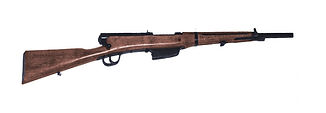
Scotti mod.30

Beretta mod. 31
1930-1935
AMMUNITION
Recognizing the potential benefits of a semi-automatic, full power cartridge rifle (unlike the 'Arma Automatica' tested in 1921-23) as a practical weapon for troops, new directives were issued in April 1930 to factories interested in developing prototypes:
-
Reliable accuracy up to 600 meters (4mx4m group)
-
Steel sheet penetration of 2mm at 600m
-
Preference for a 7.65mm cartridge with a velocity of 800m/s, compatible with heavy machine guns
This last requirement was ultimately abandoned in September 1931, leading to renewed efforts to develop a cartridge with a bullet around 7mm for rifles and light machine guns (with a practical range within 600 meters) and a 7.92 (later 8mm) for heavy machine guns (with a practical range within 2000 meters). These new studies were conducted by FARE Terni, SMI and Bombrini Parodi Delfino.
The request also included the necessity of rechambering existing mod. 91 weapons and light machine guns for the new cartridge.
The initial 7mm caliber cartridges developed by Terni weighed 10 grams (154 grains) and had an initial velocity of 810m/s, compared to the 720 m/s of the 6.5x52. Terni conducted experiments with these new intermediate cartridges by converting the semi-automatic rifle mod. 1921-28 and old mod. 91 rifles to the new caliber.
In 1932, the Ministry of War, realizing that the development of a new ammunition was having too many setbacks, radically changed the methodology of approach to the problem, requiring the development of the ammunition first and only then, possibly, a new weapon system, making sure that existing weapons could also be modified with the new cartridge.
The new directives for a 7mm cal. cartridge were:
- Wounding capacity up to 1200m
- Adequate precision up to 500m.
In November 1932 the Ministry, probably following specific advice, ordered B.P.D. and S.M.I. to resume the study on an improvement of the 6.5x52 cartridge, hoping to achieve performances similar to those required by a new 7mm cartridge.
Both the tests of the new 6.5x52 and those of the new 7mm cartridge were unsuccessful.
With dispatch no. 5190 of 18 March 1933, the Ministry finally decided to abandon research on the 7mm cartridge, focusing instead on experiments with a new 8mm caliber cartridge for heavy machine guns, which was bearing good fruit.
ARMS DEVELOPMENT
In 1930, the Training Office of the Corp Comand of the Army Staff Headquarters (Ufficio Addestramento del Comando del Corpo di Stato Maggiore - CCSM) elencated the new requirements for a semiauto rifle to be universally adopted:
-
Weight similar to the Mod. 91 rifle, and not exceeding 4 kg
-
Intermediate length between Mod. 91 rifle and Mod. 91 carbine (1,10-1,15m)
-
Cartridge of the same caliber that could be used in the LMG, about 7-7,5 mm, not exceeding 8mm
-
Cartridge and bullet lighter than standard 6.5 Mod. 91-95 ammo
-
Sight distance and graduation fitting for target shooting
-
Precision and tension of the bullet within 400m superior to that of a Mauser 98
-
Wounding capabilities up to 1200m
-
two styles of magazine: one capable of 5-6 rounds, one of 10.
-
Magazine hold open device
-
Simple, sturdy and reliable mechanism, covered from external elements
-
gun profile without edges and comfortable to carry sideways on the back or with one hand in its baricenter.
-
separate bayonet, but with a fast, strong and effective mount
-
possibility of single loading the gun if the feeding mechanism is inoperable
In June 1931 the Army started testing several semiautomatic rifles, from Breda (mod. 31 CR), MBT (Mod. 31), Si.St.Ar. (unknown model designation, designed by engineer Niccolò Mancini) and Scotti (Mod. TS). Basic requirement were that these semiautomatic rifles had to be in carbine length, take the standard mod.91 bayonet and the standard mod.91 clip.
In October 1932, the army further evaluated two semi-automatic rifles chambered for 6.5x52: the Scotti Mod. X and a prototype by Gino Revelli, son of Abiel Bethel. While the Revelli prototype had some issues, the Scotti Mod. X, already in limited production for demonstration purposes, was requested in a quantity of 250 units for trial and training specific units.
By the end of 1933, the General Staff concluded that semi-automatic rifles should be used by specialized battlefield units. They found the presented rifles and carbines to be quite promising, despite needing further improvements and needing a proper adaptation to the new cartridge still in development

M.B.T. mod. 31

Terni "mod.31", Genovesi/Revelli

Breda CR31

Scotti mod. TS (1931)

Scotti mod. IX (1931)
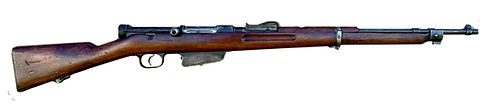
Scotti mod. X (1932)
Pic Courtesy of M. Holmes
1936-1938
AMMUNITION
After adopting the 8x59 Breda cartridge for heavy machine guns (Fiat Mod. 35 and the subsequent Breda Mod. 37), the Royal Army returned its focus to the cartridge for individual firearms like rifles and Light machine guns. In 1935, BPD proposed a new cartridge, not in 8mm but in 7.35mm, an ideal size for a bullet, with adequate diameter and weight. Importantly, this cartridge could also reuse the old 6.5mm barrels via a suitable reboring.
The new cartridge was studied in November 1935, and by May 25, 1936, the initial details were defined:
-
51mm case, nearly interchangeable in terms of base and angles with the previous 6.5x52, primarily differing in the collar to accommodate the new bullet.
-
Muzzle velocity of 700 m/s
-
Capable of cycling the Breda Mod. 30 with a rebored barrel
-
Maximum Powder/gas performance with a barrel of approximately 520mm (Breda Mod. 30 barrel length)
-
8 grams (123gr) pointed bullet with an aluminum apical, lead core
-
2.67 grams (41gr) of nitrocellulose
Initial tests conducted in the second half of 1936 at the Infantry Experimental Center of Civitavecchia yielded unsatisfactory results.
Several irregularities in nitrocellulose combustion were identified, leading to low precision and high dispersion. However, the Mod. 30 machine guns cycled satisfactorily with the rebored barrels.
Despite these issues, the project demonstrated a clear potential, and the Ammo factory of Bologna (Pirotecnico) was tasked with resolving the problems. Over a year, they developed the definitive cartridge specifications, maintaining the same dimensions but improving the load for better accuracy and dispersion.
The final version of the 7.35x51 cartridge was prepared in the first months of 1938, although the specifications remained "provisional" until January 1939.
ARMS DEVELOPMENT
Fucile mod.38
Between 1936 and 1937, engineer Roberto Boragine from the Technical Service for Weapons and Ammunition developed the details of the Mod. 38 rifle, adhering to the new 7.35 cartridge specifications and designed to utilize old, worn-out Mod. 91 rifles, specifically their barreled action.
With circular no. 4043 of March 25, 1938, the Mod. 38 rifles and carbines were officially adopted, and production began by converting Mod. 91 long rifles. As of November 1938, there were approximately 2,080,000 Mod. 91 weapons (Rifles and Carbines) in operational condition.
An initial order for 621,000 Mod. 38 Rifles was placed, primarily to replace worn-out or lent weapons (to paramilitary formations such as MVSN, GIL, etc.), accompanied by an order for several hundred thousand Mod. 38 Carbines, both Cavalry and TS models.
The cost of these conversions was 76.40 lire for Rifles (requiring a new stock and related metal parts) and 71 lire for Carbines. This cost could be reduced to 25 lire by recycling the old bayonet latch with Cavalry Carbines. Further savings were realized by reusing old stocks from the Tromboncino Mod. 28 for musket conversions.

Semiautomatic Rifles
In January 1938, a competition was announced among Italian companies to develop a Submachine Gun (Automatic Moschetto) and a Semi-automatic Rifle in the new 7.35 caliber. In the first round, none of the seven candidate semiauto models (three from Scotti, one from Revelli-Armaguerra, one from Beretta, one from Breda, and one from Terni) met the Royal Army commission's requirements.
A second round was announced for September 1938, open to additional companies. The final requirements for the semi-automatic rifle were:
-
Caliber 7.35x51
-
Barrel length 535mm
-
Total length 1.1m
-
Weight, including bayonet, 4kg
-
Loading via Mod. 91 clips
-
Exclusion of direct gas-operated models
-
Maximum simplicity and robustness
-
Maximum 8 MOA during trials
-
Single rear sight, adjustable from 100 to 500m
-
Manual safety, with firing pin blocker
The following participated in this second session:


Terni (MAF derivative?)
Beretta Mod. 37 (Marangoni)


Breda CR5
Scotti mod. 38 (XVI?)

F.N.A. mod. 38 (Pavesi)

Armaguerra mod. 38 (Revelli)
Pic made by Salle
Si.St.Ar - Firenze (Niccolò Mancini)
The winner in the September 1938 tender process was Armaguerra's Rifle, that was officially adopted as the Mod. 39 Rifle. The Royal Army placed an initial order for 50,000 rifles, later increased to 103,000. In response, Revelli Manifattura Armi Guerra decided to establish its own, brand new factory in Cremona rather than licensing production of the Mod. 39 rifle to another company.
However, Armaguerra didn't manage to set up production lines for the semi-automatic Mod. 39 rifle before the Ministry of War abruptly halted the entire Mod. 38 and Mod. 39 project due to Italy's imminent entry into World War II.

Armaguerra mod. 39 in its final, 6.5x52 configuration, early 1940.
Barrel was elongated to better exploit the 6,5x52 round.
Sights were adjustable and not fixed as the trial prototype.
Only 200 got produced before production was canceled definitively.
Pic by Rock Island Auction
As early as August 1939, Germany inquired about Italy's willingness to join them in a potential European conflict. Mussolini, Ciano, and the General Staff generals, perfectly knowing the army's state of ongoing modernization and lack of raw materials, could only provide a detailed list of the resources needed to sustain a war effort for several years and to complete the modernization of its equipment. Known as the "Molybdenum List," this revealed Italy's unpreparedness to the Germans. Despite this, Hitler still hoped that France and the United Kingdom would not intervene to defend Poland, hence rendering Italian partecipation superfluous.
With the sudden start of the European War, although it arrived sooner than expected, the Italian General Staff realized the need to prioritize existing resources. The ongoing modernization to the new caliber, while advancing regularly and with ever improving production lines, couldn't guarantee sufficient armaments for a prolonged conflict. Approximately 1 million rifles were needed just to equip frontline troops, and 3 million were needed for full mobilization.
To address this, in December 1939, the General Staff made the drastic decision to halt production of weapons in 7.35x51 and convert production lines to 6.5x52. The existing models (short rifles, fixed-notch muskets) were kept unchanged. This way they could easily keep up with the war effort productions, while simplifying logistical lines by avoiding double cartridge for the infantry, hence solving potential catastrophical issues (tho rumors of 7.35 ammo being delivered to the wrong frontlines exist).
The 7.35mm weapons already distributed were withdrawn from the few units equipped with them. These rifles were later partially sold to Finland in February 1940 (100,000 units, of which 94,500 arrived), partially distributed to the GIL (in exchange for 452,000 Mod. 91 weapons), and some were stored for future use or asssigned to territorial anti-aircraft defense units. Several ended up in Ethiopia.